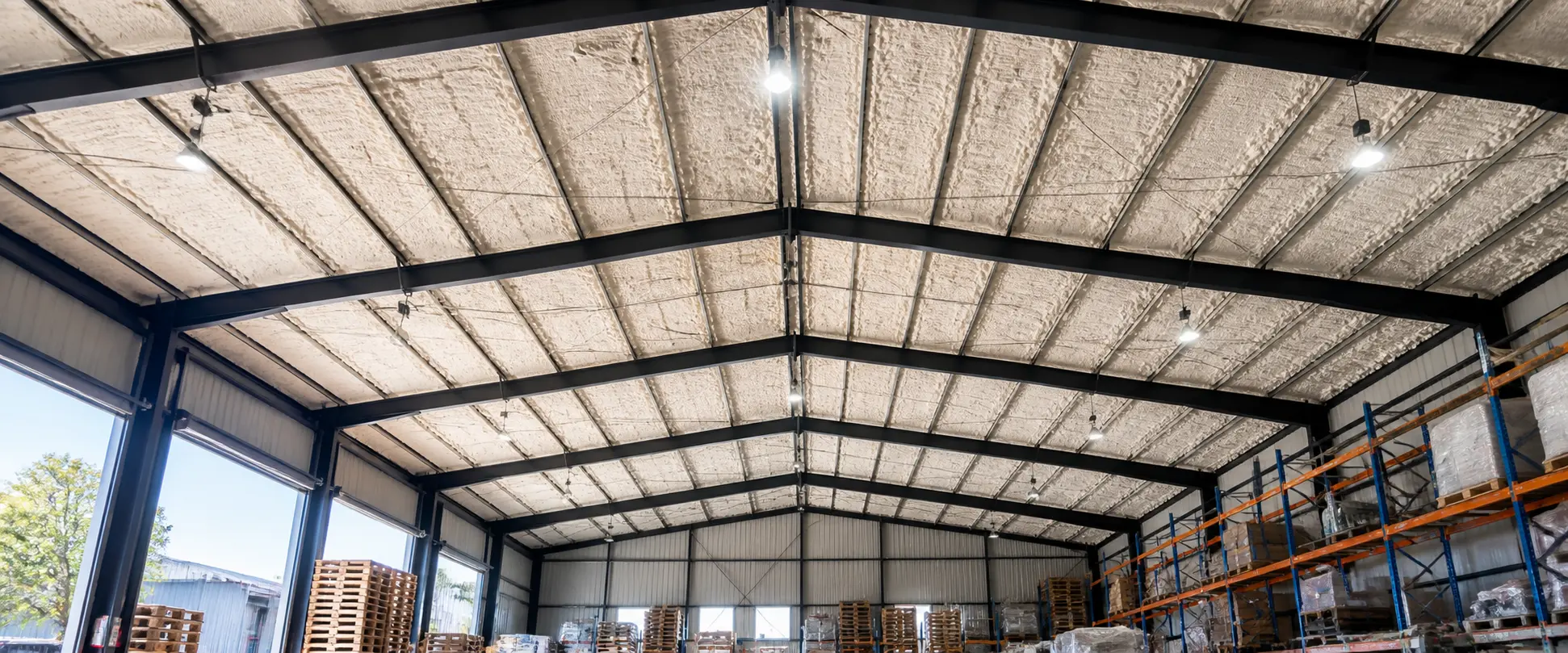
This warehouse spray foam insulation guide explains how insulation systems perform in large industrial buildings, why spray foam is widely used in warehouses, and what factors affect performance, cost and long-term efficiency. In environments like Brisbane, where metal roofs absorb intense heat and humidity creates condensation issues, warehouses require insulation that goes beyond basic thermal resistance.
Many warehouse owners initially rely on traditional insulation, but large open spaces behave very differently from residential buildings. Air leakage, radiant heat and moisture buildup can quickly reduce the effectiveness of standard materials.
From experience working on insulation projects, warehouses are one of the clearest examples where the right insulation solution can dramatically improve comfort, energy efficiency and operational performance.
Why Warehouse Insulation Is Critical for Large Buildings
Warehouses typically have large roof spans, high ceilings and minimal internal separation. This makes them highly exposed to external temperature conditions.
Without proper insulation, common issues include:
- excessive heat buildup during the day
- unstable indoor temperatures
- rising energy costs
- poor working conditions
- moisture and condensation problems
In many Brisbane warehouses, the roof is the main source of heat gain. Metal roofing absorbs solar radiation and transfers it directly into the building.
Improve Your Warehouse Efficiency
Get a Free Commercial Quote
For large-scale projects, professional commercial spray foam insulation solutions in Brisbane can significantly improve temperature control and reduce operating costs.
Common Problems in Uninsulated Warehouses
Heat Build-Up in Metal Roofs
Metal roofs can trap and radiate heat into the building, making internal temperatures significantly higher than outside conditions.
Condensation and Moisture Issues
Condensation is one of the most common problems in warehouses. When warm air meets cooler roof surfaces, moisture forms and can drip onto stored goods or equipment.
Energy Loss and High Operating Costs
Poor insulation forces cooling systems to work harder, increasing energy consumption and long-term costs.
From experience, these three issues often occur together rather than separately.
Why Spray Foam Is Ideal for Warehouse Insulation
Spray foam insulation is particularly effective in warehouses because it addresses multiple problems at once.
When applied, the foam expands and adheres to surfaces, creating a continuous barrier that:
- reduces heat transfer
- seals air leaks
- limits moisture movement
- improves overall building efficiency
Unlike traditional materials, it performs well in large, open structures with irregular surfaces and metal roofing systems.
Types of Warehouses and Their Insulation Needs
Different types of warehouses require different insulation approaches.
Logistics and Distribution Centres
These buildings often require stable temperatures to protect goods and maintain working conditions.
Manufacturing Facilities
Temperature control can affect machinery performance and worker comfort.
Storage Warehouses
Even unheated storage buildings benefit from insulation to prevent condensation and protect stored items.
Cold Storage Buildings
These require specialised insulation systems to maintain controlled environments.
Understanding how the building is used is essential before selecting an insulation strategy.
Open Cell vs Closed Cell Spray Foam for Warehouses
Both types of foam are used in warehouse projects, depending on requirements.
Open cell foam:
- expands more
- provides strong air sealing
- is more cost-effective
Closed cell foam:
- has higher R-value
- offers better moisture resistance
- adds structural strength
The choice depends on the building design, climate and performance goals.
Spray Foam vs Other Warehouse Insulation Options
Traditional insulation materials are often used in warehouses but have limitations.
Batts:
- difficult to install in large open structures
- leave gaps
- can compress over time
Foil insulation:
- reflects radiant heat
- does not provide strong thermal insulation
- does not seal air leaks
Rigid boards:
- require precise installation
- gaps can reduce effectiveness
Spray foam provides both insulation and air sealing, making it more consistent in large buildings.
Warehouse Spray Foam Installation Process
A proper installation always starts with an inspection.
Typical steps include:
- evaluating the roof structure
- identifying heat transfer areas
- checking moisture conditions
- selecting the correct foam type
- applying foam evenly across surfaces
Installation quality is critical. Poor application can reduce performance and create uneven insulation coverage.
Warehouse Insulation Costs and ROI
Costs vary depending on several factors:
- building size
- roof access
- insulation thickness
- foam type
- project complexity
Although spray foam often has a higher upfront cost, many warehouse owners focus on long-term ROI.
Benefits that affect ROI include:
- reduced energy bills
- improved productivity
- lower maintenance costs
- longer insulation lifespan
Book a Site Assessment
Request a Free Site InspectionReal Warehouse Insulation Example
A warehouse project in Brisbane highlighted how insulation can transform building performance.
The facility had a large metal roof and experienced severe heat buildup during summer. Workers struggled with uncomfortable conditions and cooling systems were running constantly.
After inspecting the building, significant heat transfer through the roof was identified.
Once spray foam insulation was installed, internal temperatures became more stable and energy usage decreased. The business reported improved working conditions and reduced cooling costs.
Common Mistakes Warehouse Owners Make
Choosing the Cheapest Option
Lower-cost insulation often leads to higher long-term expenses.
Ignoring Roof Insulation
The roof is usually the main source of heat gain in warehouses.
Poor Installation
Incorrect application reduces insulation performance.
Not Considering Moisture Issues
Condensation problems can cause long-term damage if not addressed properly.
Where Else Spray Foam Can Be Used
While warehouses benefit greatly from insulation upgrades, other buildings can also improve performance with residential spray foam insulation services in Brisbane.
For projects focused specifically on roof performance, roof spray foam insulation in Brisbane is often the most effective solution.
Speak With an Insulation Specialist
Get Your Free Insulation QuoteFrequently Asked Questions
Is spray foam suitable for large warehouses
Yes. It performs particularly well in large open structures with metal roofing.
Can it reduce condensation
Yes. It helps stabilise surface temperatures and reduce moisture buildup.
How long does it last
Spray foam can last for decades when installed correctly.
Is it worth the cost
Many warehouse owners see long-term savings through reduced energy use and improved efficiency.
Conclusion
Warehouses face unique insulation challenges due to their size, structure and exposure to external conditions. Heat buildup, condensation and energy loss are common issues that can affect both operations and costs.
Spray foam insulation offers a reliable solution by combining thermal performance with air sealing. For many commercial buildings, it provides one of the most effective ways to improve efficiency and long-term performance.