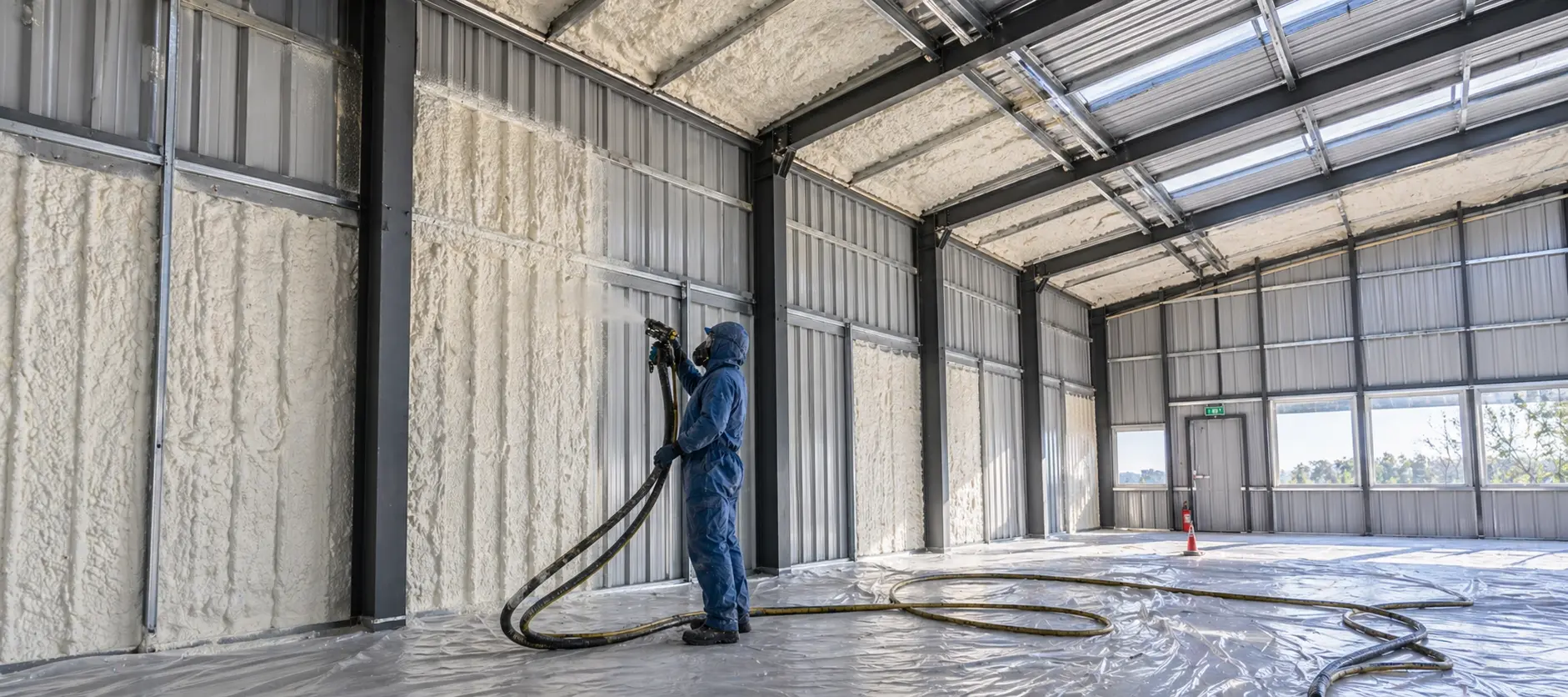
Spray foam insulation for commercial buildings has become one of the most effective solutions for reducing energy costs, improving indoor comfort and solving temperature issues in large commercial spaces. For warehouses, factories, retail spaces and office buildings—especially in hot climates like Brisbane—poor insulation often leads to excessive heat transfer, rising operational costs and uncomfortable working environments.
Many commercial properties still rely on outdated insulation systems that fail over time. Traditional batts can shift, compress or leave gaps, while metal roofs often allow excessive heat to build up during the day. Spray foam solves these issues by creating a continuous insulation barrier that also seals air leaks.
From working on commercial insulation projects, one thing becomes obvious very quickly: every building performs differently. A warehouse with a large metal roof has very different insulation needs compared to an office or retail space. That’s why proper assessment always comes first.
Why Commercial Buildings Need Better Insulation
Commercial buildings often lose significant amounts of money through poor insulation performance.
Common issues include:
- high cooling costs
- excessive roof heat transfer
- uncomfortable working temperatures
- condensation issues
- poor temperature consistency
Large roof surfaces are usually the biggest source of heat gain in commercial buildings, particularly warehouses and industrial spaces.
When these issues are left unresolved, HVAC systems work harder and operating costs increase.
Improve Your Commercial Building Efficiency
Get a Free Commercial QuoteFor businesses operating in larger facilities, professional commercial spray foam insulation solutions in Brisbane can significantly improve thermal performance.
What Is Commercial Spray Foam Insulation
Spray foam insulation is a polyurethane material applied as a liquid that expands rapidly when sprayed onto walls, ceilings or roofing surfaces.
Once cured, it forms a solid insulation layer that:
- reduces heat transfer
- seals air leaks
- helps control condensation
- improves overall building efficiency
Unlike traditional insulation systems, spray foam adheres directly to the structure and provides consistent coverage across irregular surfaces.
This makes it particularly effective in large commercial buildings with complex roof layouts.
Types of Spray Foam Used in Commercial Buildings
There are two primary types of foam used in commercial projects.
Open Cell Foam
Open cell foam is lighter and expands more during installation.
Benefits include:
- excellent air sealing
- sound absorption
- lower upfront cost
It is commonly used in interior applications where moisture exposure is limited.
Closed Cell Foam
Closed cell foam is denser and offers higher thermal resistance.
Benefits include:
- higher R-value
- moisture resistance
- structural reinforcement
- long-term durability
This option is commonly used in industrial buildings and metal structures.
Best Commercial Buildings for Spray Foam Insulation
Warehouses
Warehouses often have large metal roofs that absorb significant heat. Spray foam helps stabilise temperatures and reduce cooling expenses.
Factories
Manufacturing spaces often need temperature control to protect equipment and improve worker comfort.
Retail Buildings
Retail stores benefit from more consistent indoor temperatures and lower operational costs.
Office Buildings
Improved insulation helps maintain comfortable working environments while reducing energy bills.
Agricultural Buildings
Storage facilities and farming structures often benefit from condensation control and improved temperature stability.
Benefits of Spray Foam for Commercial Properties
Lower Energy Costs
Better insulation reduces HVAC demand and lowers electricity bills.
Improved Comfort
Employees and customers benefit from more consistent indoor temperatures.
Moisture and Condensation Control
This is especially important for metal buildings where condensation can damage products and equipment.
Long-Term Durability
Spray foam adheres directly to surfaces and typically lasts far longer than many traditional materials.
Commercial Spray Foam Installation Process
Every project starts with an inspection.
This typically includes:
- roof inspection
- identifying heat transfer issues
- checking ventilation
- reviewing moisture concerns
- selecting the correct foam type
Once preparation is complete, the foam is applied directly to the required surfaces.
Proper installation is critical. Poor application can create uneven coverage or ventilation issues.
One thing seen repeatedly is businesses choosing the cheapest quote rather than the best installer—which often creates bigger problems later.
Commercial Spray Foam Costs and ROI
Commercial insulation costs vary depending on:
- building size
- roof access
- foam thickness
- building complexity
- open or closed cell selection
While the upfront investment can be higher than traditional insulation systems, many commercial property owners see strong long-term ROI through reduced energy bills and lower maintenance costs.
Book a Site Assessment
Request a Free Site InspectionReal Commercial Project Example
A warehouse project in Brisbane stands out as a great example.
The building had a large metal roof that created severe heat buildup during summer. Staff reported uncomfortable working conditions and cooling costs were rising.
After inspecting the building, major heat transfer issues were identified through the roof structure.
Once spray foam was installed, internal temperatures improved significantly and the business reduced its cooling costs.
This is a common issue in warehouses and industrial facilities across Brisbane.
Common Mistakes Building Owners Make
Choosing Based Only on Price
Cheaper solutions often fail long-term.
Ignoring Roof Heat Transfer
Many owners focus on walls while ignoring the roof.
Hiring Inexperienced Installers
Poor installation can reduce performance dramatically.
Delaying Insulation Upgrades
Waiting too long often leads to higher operational costs.
Is Spray Foam Right for Residential Properties Too?
While commercial buildings often benefit the most from large-scale applications, homeowners can also improve comfort with residential spray foam insulation services in Brisbane.
Businesses dealing specifically with roof heat can also explore roof spray foam insulation in Brisbane for targeted upgrades.
Speak With a Commercial Insulation Specialist
Get Your Free Insulation QuoteFrequently Asked Questions
How long does commercial spray foam last?
Properly installed foam can last for decades.
Can spray foam be installed in existing buildings?
Yes, many retrofit projects are completed without major disruption.
Does spray foam help metal buildings?
Yes. It performs extremely well in warehouses and metal structures.
Is it worth the investment?
For many businesses, reduced energy costs and improved comfort make it worthwhile.
Conclusion
Commercial buildings lose huge amounts of energy through poor insulation. Large roofs, metal structures and inefficient insulation systems create unnecessary operational costs.
Spray foam offers a long-term solution by improving thermal performance, reducing air leakage and helping businesses create more efficient buildings.
For warehouses, offices, retail spaces and industrial facilities, it can be one of the most effective insulation upgrades available.