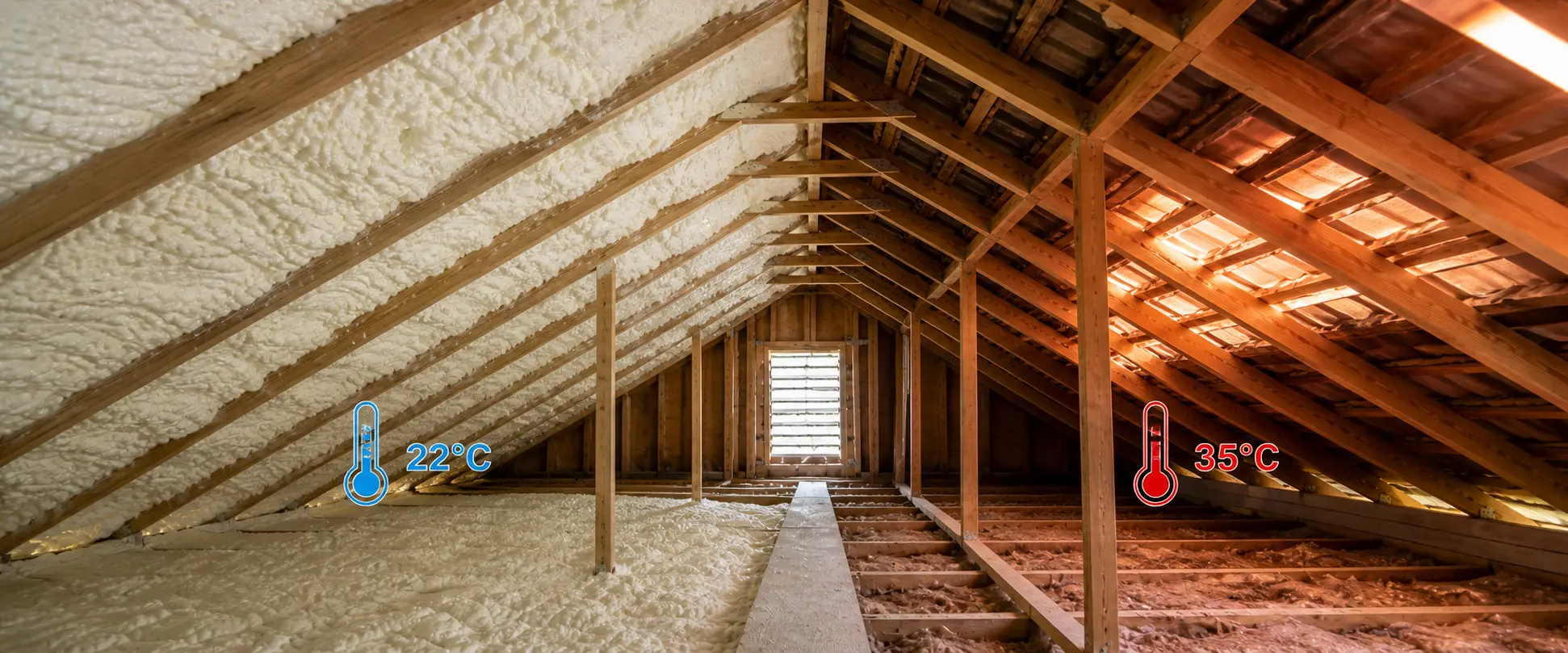
Does spray foam insulation save energy? Yes, it does—and in many cases, it can significantly reduce energy consumption by sealing air leaks, improving thermal performance and reducing the workload on heating and cooling systems. In climates like Brisbane, where heat enters through roofs and gaps in the building envelope, this type of insulation often delivers noticeable results quickly.
From experience working on insulation projects, energy savings usually come from fixing problems that traditional insulation does not address properly. For example, air leakage and uneven coverage often allow heat to move freely through a building. Spray foam solves both issues at the same time.
Does Spray Foam Insulation Really Save Energy
Yes, and the reason is simple. Spray foam does more than slow heat transfer. It also seals gaps where air enters and escapes.
Because of this, buildings maintain more stable indoor temperatures. As a result, air-conditioning systems do not need to run as often or as long.
In many Brisbane properties, especially those with roof cavities, this makes a noticeable difference within days of installation.
Start Reducing Your Energy Bills
Get a Free Spray Foam QuoteIf you want to improve efficiency, professional residential spray foam insulation services in Brisbane can help identify where your building is losing energy.
How Spray Foam Insulation Reduces Energy Use
Spray foam reduces energy use through several mechanisms that work together rather than independently.
Air Sealing and Leak Prevention
Traditional insulation materials often leave small gaps. However, spray foam expands and fills those spaces completely.
As a result, it prevents hot air from entering and cool air from escaping. This alone can significantly reduce energy loss.
Higher R-Value Performance
Closed cell spray foam, in particular, provides high thermal resistance. Therefore, it slows heat transfer more effectively than many traditional materials.
Because of this, indoor temperatures remain more consistent throughout the day.
Reduced HVAC Workload
When less heat enters the building, cooling systems work less. Over time, this reduces energy consumption and wear on equipment.
In many cases, systems cycle less frequently, which improves efficiency even further.
How Much Energy Can Spray Foam Save
Energy savings depend on the building, but many projects show measurable improvements.
Typical results include:
- noticeable reduction in cooling usage
- more stable indoor temperatures
- lower electricity bills over time
In some cases, buildings can reduce energy use by 15% to 40%, depending on how much air leakage existed before installation.
Because every building is different, the actual savings vary. However, the biggest gains usually come from poorly insulated roof spaces.
Spray Foam vs Traditional Insulation Energy Efficiency
Comparing insulation types helps explain the difference in performance.
| Feature | Spray Foam | Traditional Batts |
|---|---|---|
| Air sealing | Excellent | Poor |
| Heat transfer control | High | Moderate |
| Coverage consistency | Complete | Can leave gaps |
| Long-term performance | Stable | Can degrade |
Although batts can slow heat transfer, they do not stop airflow. Therefore, their real-world performance is often lower than expected.
Real Example: Energy Savings After Installation
One project in Annerley involved a home where the upstairs bedroom became extremely hot during summer. Even with air conditioning running constantly, the room remained uncomfortable.
After inspecting the roof cavity, it became clear that gaps in the insulation allowed heat to enter freely. Once spray foam was installed along the roofline, the change was immediate.
The room became comfortable again, and the homeowners reported that their energy bills dropped. Situations like this are common when insulation addresses both air leakage and heat transfer.
Book a Professional Inspection
Request a Free Site InspectionIs Spray Foam Worth It for Energy Savings
In many situations, yes. While the upfront cost is higher, the long-term benefits often justify the investment.
Key advantages include:
- reduced energy bills
- improved comfort
- consistent indoor temperatures
- long-lasting performance
For buildings with significant heat gain through the roof, the return on investment can be strong.
Common Misconceptions About Spray Foam and Energy
Some assumptions can lead to confusion.
“All insulation saves the same amount of energy”
This is not true. Performance depends on air sealing as well as thermal resistance.
“Energy savings are minimal”
In reality, savings can be significant, especially in poorly insulated buildings.
“Installation doesn’t matter”
Incorrect installation reduces performance. Therefore, choosing experienced installers is critical.
Where Spray Foam Makes the Biggest Difference
Energy savings are most noticeable in:
- roof cavities
- metal-roof buildings
- garages and sheds
- warehouses and commercial spaces
For larger structures, commercial spray foam insulation solutions in Brisbane can improve efficiency across the entire building.
Similarly, targeted upgrades such as roof spray foam insulation in Brisbane often deliver the fastest results.
Speak With an Insulation Specialist
Get Your Free Insulation QuoteFrequently Asked Questions About Spray Foam Energy Efficiency
Does spray foam insulation reduce electricity bills
Yes. By reducing heat transfer and air leakage, it lowers the demand on cooling systems.
Is spray foam better than traditional insulation for energy savings
In most cases, yes, because it seals air leaks as well as insulating.
How quickly do you see results
Many homeowners notice improvements in comfort immediately, while energy savings become visible over time.
Does spray foam work in hot climates like Brisbane
Yes. It performs especially well in hot environments where roof heat is a major issue.
Conclusion
Spray foam insulation can significantly improve energy efficiency by sealing air leaks and reducing heat transfer. For many buildings, especially in Brisbane, this leads to lower energy use, improved comfort and more stable indoor temperatures.
When installed correctly, it provides long-term benefits that go beyond simple insulation, making it one of the most effective solutions for reducing energy consumption.