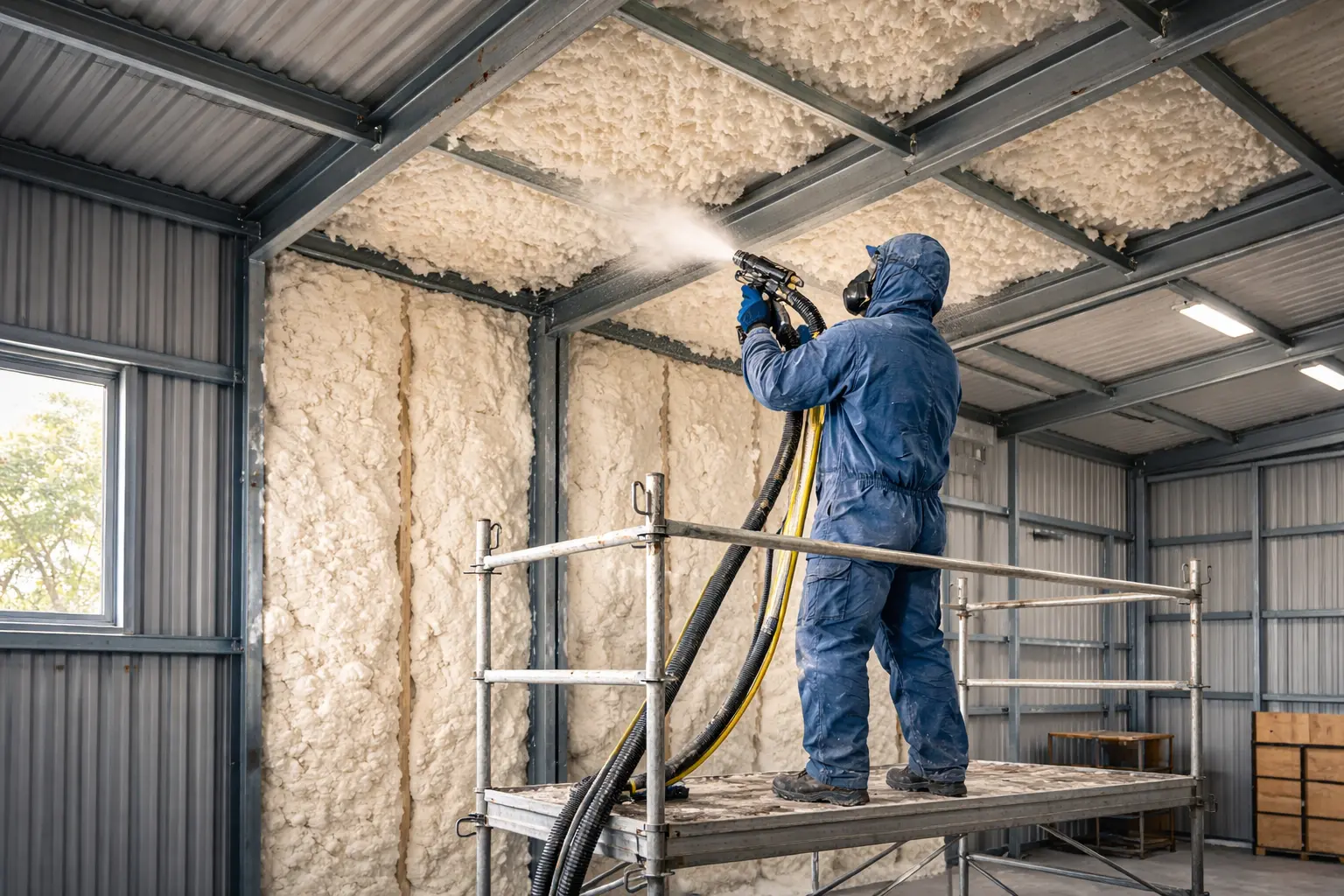
Sheds are extremely common across Brisbane properties. Whether used as a workshop, garage, storage space or home business area, sheds often become some of the most versatile buildings on a property.
However, many shed owners quickly discover a major problem: metal sheds in Brisbane can become unbearably hot and develop serious condensation issues.
Without proper insulation, a shed can turn into a heat trap during summer and accumulate moisture during cooler nights. This can damage tools, equipment and stored items, while also making the space uncomfortable to work in.
From my experience working with insulation projects across Brisbane, sheds are one of the structures that benefit the most from proper insulation. In many cases, property owners initially try traditional insulation solutions that don’t perform well in metal structures.
This is where spray foam insulation often stands out as one of the most effective solutions.
Why Insulating a Shed Is Important in Brisbane
Brisbane’s climate creates unique challenges for sheds and outbuildings.
With intense sun exposure, high humidity and fluctuating temperatures, uninsulated sheds can experience extreme internal conditions.
During summer, metal roofing absorbs heat throughout the day and radiates it into the shed interior. This can push internal temperatures far above outdoor levels.
Without insulation, common issues include:
- excessive heat buildup
- condensation forming on metal surfaces
- uncomfortable working environments
- moisture damage to stored equipment
Proper insulation helps stabilise temperatures and protects the contents of the shed.
Get a Free Spray Foam QuoteFor property owners looking to improve energy efficiency and comfort, professional residential spray foam insulation services in Brisbane can provide a long-term insulation solution.
Common Problems With Uninsulated Metal Sheds
Many sheds are built using metal framing and roofing, which conducts heat quickly. Without insulation, the internal environment becomes difficult to control.
Extreme Heat Inside the Shed
One of the most common complaints from shed owners in Brisbane is excessive heat.
Metal roofs absorb solar heat throughout the day and radiate it inside the structure. This can make workshops or garages extremely uncomfortable to use.
Condensation and Moisture
Condensation is another major issue in sheds.
When warm air meets cooler metal surfaces, moisture can form inside the roof and walls. Over time, this moisture can lead to:
- rust on tools and equipment
- damage to stored materials
- mould or damp conditions
Poor Temperature Control
Without insulation, sheds experience dramatic temperature swings between day and night.
This can make the space unsuitable for workshops, storage or hobby use.
Why Spray Foam Is Ideal for Shed Insulation
Spray foam insulation works differently from traditional insulation materials.
Instead of simply sitting between structural components, spray foam expands when applied, filling gaps and sealing cavities within the structure.
Once cured, it forms a continuous insulation layer that adheres directly to the metal surfaces of the shed.
Key advantages include:
- excellent thermal insulation
- strong air sealing properties
- improved moisture control
- long-lasting durability
Because spray foam adheres directly to metal roofs and wall panels, it helps eliminate many of the air gaps that allow heat and moisture to enter the structure.
For sheds where the roof is the primary source of heat gain, solutions like roof spray foam insulation in Brisbane can significantly reduce internal temperatures.
Spray Foam vs Other Shed Insulation Options
Several insulation options are available for sheds, but they perform very differently in metal buildings.
Spray Foam vs Insulation Batts
Insulation batts are commonly used in residential construction but are often difficult to install effectively in sheds.
Batts require framing cavities and precise installation. In metal sheds, gaps around framing and roofing panels often allow air leakage.
Spray foam expands to seal these gaps, creating a more consistent insulation barrier.
Spray Foam vs Reflective Foil Insulation
Reflective foil insulation works by reflecting radiant heat rather than insulating against it.
While it can reduce heat transfer from the roof, it does not provide strong thermal insulation on its own and does not seal air gaps.
Spray Foam vs Foam Boards
Rigid foam boards can provide insulation in sheds but often require cutting and fitting between structural components.
If gaps remain around the boards, heat and moisture can still enter the shed.
Spray foam eliminates this issue by expanding into small cavities and sealing the space.
Real Example: Insulating a Shed in Brisbane
One project that stands out involved a homeowner who used his shed as a workshop. During summer, the internal temperature became so high that it was almost impossible to work inside during the afternoon.
When we inspected the structure, we found that the metal roof had no insulation at all. Heat was radiating directly into the space throughout the day.
After applying spray foam insulation to the roofline, the internal temperature improved significantly. The space became usable again and condensation issues were eliminated.
Projects like this are quite common in Brisbane, especially with metal sheds exposed to direct sun.
Where Spray Foam Can Be Used in a Shed
Spray foam insulation can be applied to several areas within a shed structure.
Typical applications include:
- roof panels
- wall panels
- ceiling cavities
- structural framing gaps
Each installation is designed to improve the overall insulation performance of the building.
For larger structures such as workshops or storage facilities, commercial spray foam insulation solutions in Brisbane can help control temperature and humidity across the entire building.
How Spray Foam Insulation Is Installed in Sheds
Professional spray foam installation typically begins with a site inspection.
During the inspection, installers evaluate:
- the structure of the shed
- ventilation conditions
- roof and wall materials
- insulation requirements
The spray foam is then applied directly to the internal surfaces of the shed roof or walls, where it expands and forms a continuous insulation layer.
Because the foam adheres to the structure, it remains in place and maintains its insulating properties for many years.
Is Spray Foam Insulation Worth It for Sheds?
For many shed owners in Brisbane, spray foam insulation is one of the most effective ways to improve the usability of their building.
Key benefits include:
- cooler internal temperatures during summer
- reduced condensation and moisture
- improved comfort for workshops or hobby spaces
- protection for stored tools and equipment
Although spray foam insulation has a higher upfront cost than some traditional materials, its long-term performance and durability often make it a worthwhile investment.
FAQs About Shed Insulation in Brisbane
What is the best insulation for metal sheds in Brisbane?
Spray foam insulation is often considered one of the most effective solutions because it seals gaps and provides strong thermal performance.
Can spray foam stop condensation in sheds?
Yes. Spray foam helps reduce condensation by insulating metal surfaces and preventing warm air from contacting cold metal panels.
How long does spray foam insulation last?
Spray foam insulation can last for decades when properly installed.
Is shed insulation worth it in Brisbane?
Yes. Proper insulation can significantly reduce heat buildup and improve the comfort and usability of a shed.
Get a Free Spray Foam QuoteConclusion
Sheds are exposed to some of the toughest temperature conditions on a property, especially in Brisbane’s hot and humid climate.
Without insulation, metal sheds can become extremely hot during the day and develop condensation problems at night.
Spray foam insulation offers a highly effective way to control these issues by providing both insulation and air sealing in a single system.
For shed owners looking to improve comfort, protect equipment and reduce temperature extremes, spray foam insulation is often one of the most reliable long-term solutions available.