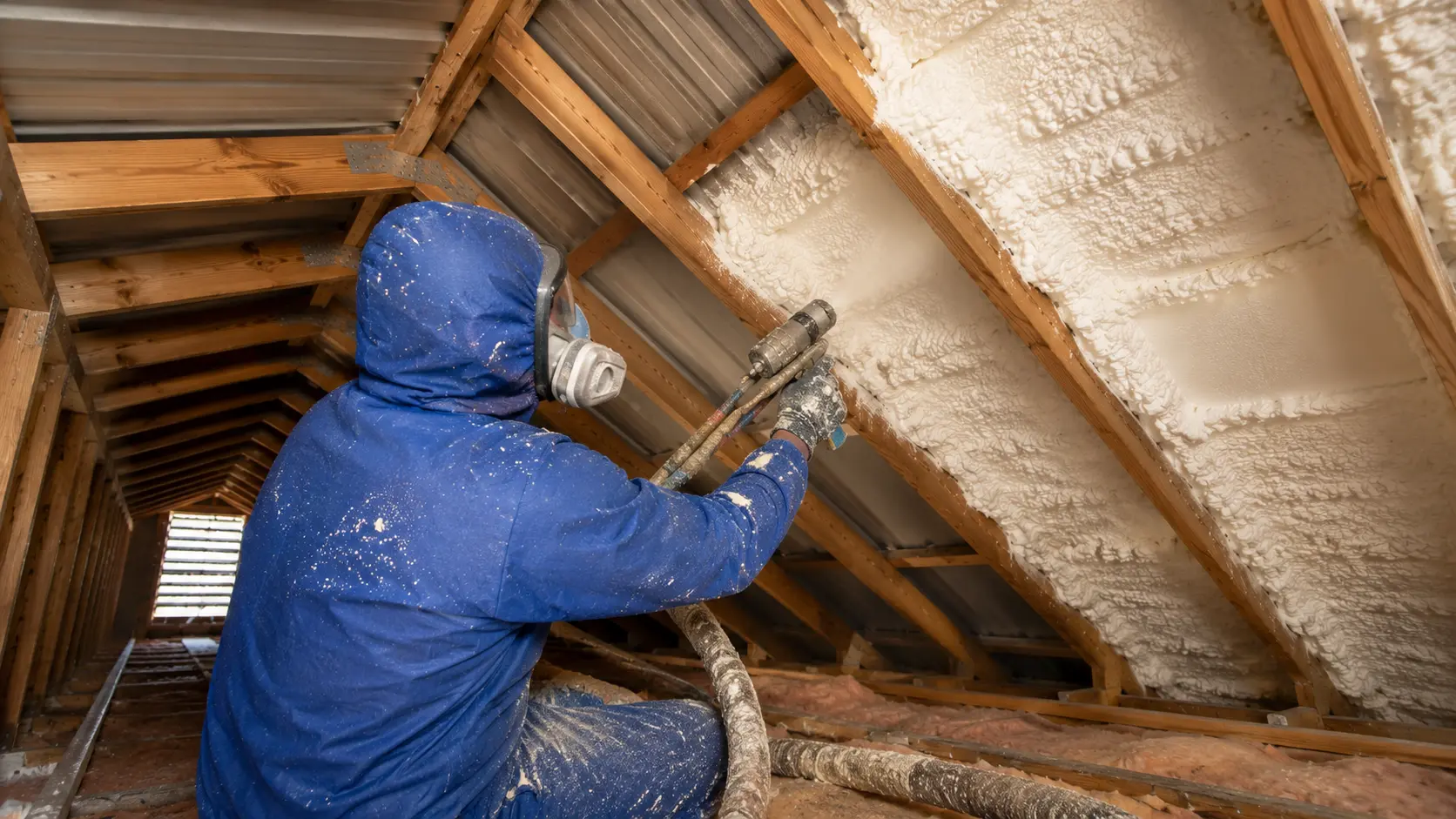
spray foam insulation installation process is easier to understand when you know each stage before work starts. The job is not just spraying foam into a roof, wall, or shed.
A good installation includes assessment, preparation, protection, application, curing, and final inspection. In this guide, I explain what happens step by step. I also show what Brisbane property owners should check before choosing an installer.
Why the Spray Foam Insulation Installation Process Matters
The spray foam insulation installation process matters because spray foam is applied on site. It is not a pre-made batt that simply gets placed between joists. Instead, the foam is created through a chemical reaction during application.
Because of that, the installer’s skill has a direct impact on the result. The foam must be mixed, sprayed, cured, and checked correctly. If one step is rushed, performance can suffer.
In my experience, most spray foam issues start before the spray gun is used. Poor site inspection, damp surfaces, incorrect foam choice, or unclear scope can all create problems. Therefore, the planning stage is just as important as the installation itself.
The process also changes depending on the building. A residential roof cavity is different from a commercial warehouse. Likewise, a metal shed needs a different approach from an internal wall cavity.
For homes, the goal is often comfort and energy efficiency. In roof spaces, the goal may include heat reduction and air sealing. For commercial buildings, the focus may be temperature control, condensation management, or operational comfort.
A professional installer should explain the expected result clearly. Spray foam can help seal gaps and reduce heat transfer. However, it should not be used to hide roof leaks, damaged surfaces, or moisture problems.
Good preparation protects the property. Before spraying, installers should cover areas that do not need foam. They should also plan access, ventilation, safety zones, and cleanup.
The right process also protects long-term performance. Spray foam should bond to clean and suitable surfaces. It should cure properly and remain stable after installation. Because of this, shortcuts are never worth it.
If your project is for a home, start by reviewing your space and goals. You can also explore our service for residential spray foam insulation in Brisbane before making a final decision.
Book a Spray Foam AssessmentStep-by-Step Spray Foam Insulation Installation Process
A proper spray foam insulation installation process usually starts with an assessment. The installer checks the area, building condition, access, and project goal. This helps determine whether spray foam is suitable.
First, the installer reviews the surface. The foam must be applied to a clean, dry, and stable substrate. Dust, moisture, rust, oil, or loose material can affect adhesion. Therefore, preparation cannot be skipped.
Next, the installer identifies the correct foam type. Open cell spray foam is softer and more flexible. Closed cell spray foam is denser and more rigid. Each product has a different purpose, so the choice should match the job.
After that, the work area is prepared. Items may be moved or covered. Sensitive areas may be protected from overspray. Access points, electrical fixtures, vents, and mechanical services should also be considered.
Then, safety controls are set. Spray foam installation requires professional equipment and protective procedures. Occupants may need to leave the area during application and curing. The installer should explain this before work begins.
The application stage comes next. The installer sprays the foam in controlled passes. The foam expands and fills gaps, cracks, and cavities. However, the thickness must be managed carefully.
Too little foam may reduce performance. Too much foam in one pass can affect curing. A trained installer knows how to build the correct thickness in a controlled way.
When I analyse a spray foam job, I always look for consistency. The foam should cover the intended area evenly. It should not leave obvious gaps, thin patches, or messy overspray.
After spraying, the foam needs time to cure. Curing time depends on the product, thickness, ventilation, and site conditions. The installer should provide clear re-entry guidance.
Finally, the area is inspected and cleaned. Trim work may be needed in some applications. The installer should check coverage, adhesion, and finish quality before leaving.
What Happens During the First Site Assessment?
The first assessment decides whether spray foam is suitable. The installer should check moisture, surface condition, access, ventilation, and building use. This step helps avoid surprises later.
In roof spaces, the inspection should include roof leaks, wiring, ductwork, and access points. For sheds or warehouses, metal surface condition also matters. If a surface is unsuitable, it should be corrected first.
A good assessment should also clarify expectations. Spray foam can improve insulation and air sealing. However, it cannot repair structural defects or replace roof maintenance.
Check My Roof CavityHow to Prepare Your Property Before Installation
Preparation makes the spray foam insulation installation process smoother. It also helps protect the property from unnecessary mess or delays. Most preparation steps are simple, but they matter.
Start by clearing access to the work area. If the job is in a roof cavity, access panels should be reachable. If the project is in a shed or warehouse, stored items should be moved away from spray zones.
Next, remove items that could be affected by overspray. Spray foam expands quickly and bonds strongly. Therefore, anything near the work area should be protected or relocated.
Electrical and mechanical services should be considered. This includes wiring, ducts, downlights, exhaust fans, and pipes. The installer should know what is present before spraying begins.
Moisture issues must be addressed first. If there is a roof leak, water stain, or damp surface, installation should wait. Spray foam should be applied to suitable conditions, not over active problems.
En mi experiencia, the best installations happen when the owner and installer agree on the scope early. Everyone should know which areas will be sprayed. It should also be clear which areas will be avoided.
For roof cavities, pest issues should also be checked. If pests have damaged wiring or materials, that should be handled before insulation. Otherwise, the foam may cover problems that still need attention.
Ventilation and temporary vacancy may be required. The installer should give clear instructions about staying out of the work area. This is especially important for homes with children, pets, or sensitive occupants.
Commercial properties need more planning. Work may need to happen outside operating hours. Equipment, stock, machinery, and staff areas may need protection. As a result, planning reduces disruption.
If you are insulating a business site, the project should be scoped around operations. You can review our service for commercial spray foam insulation Brisbane to understand suitable applications.
What Happens During Roof Spray Foam Installation?
Roof applications are one of the most common reasons people ask about spray foam. Brisbane roofs can absorb strong heat, especially during summer. Therefore, roof insulation planning must be handled carefully.
The installer first checks the roof cavity or underside of the roofline. They look for leaks, damaged materials, unsafe access, dust, and services. If issues are found, they should be addressed before spraying.
Surface condition is critical. Spray foam needs a suitable surface to bond correctly. In a roof space, this may include timber, metal, or other roof materials. Each surface should be assessed before application.
The installer then prepares the area. Stored items should be removed from the roof cavity. Nearby surfaces may be protected. Access should remain safe for the installer and equipment.
During spraying, foam is applied along the planned area. In many roofline applications, the goal is to reduce heat transfer and air leakage. However, the exact method depends on the roof structure.
Lo que he visto es that roof projects fail when people ignore existing building issues. Foam should not be used to cover leaks, wet timber, damaged sarking, or unsafe wiring. A proper roof check comes first.
Thickness and coverage must be consistent. Thin areas can become weak points. Missed corners can reduce the air sealing benefit. Because of that, careful application is important.
After spraying, the foam cures and the space is ventilated as required. The installer should explain when the area can be accessed again. They should also check the finished surface before completing the job.
Roof spray foam can be effective when the building is suitable. It can help improve thermal comfort and reduce air movement through small gaps. For more detail, review our page on roof spray foam in Brisbane.
Spray Foam Insulation Installation Process for Roof Cavities
The spray foam insulation installation process for roof cavities starts with inspection. The installer must confirm the roof area is dry, accessible, and suitable. This reduces the risk of hidden problems.
Then the area is protected and prepared. The foam is sprayed in controlled layers. After curing, the installer checks coverage and cleans the work area.
Safety, Curing Time, and Re-Entry After Installation
Safety is a major part of spray foam installation. The installer should use professional equipment, protective clothing, and proper procedures. Occupants should also follow all re-entry guidance.
Spray foam is applied as a liquid and expands into foam. During this stage, the area should be controlled. Ventilation may be needed, and people should avoid entering the work zone.
Curing time can vary. It depends on the foam type, application thickness, ventilation, and site conditions. Therefore, the installer should provide specific instructions for your project.
A professional should explain what to expect after installation. There may be a noticeable smell during curing. However, strong or persistent odour should be reviewed if it continues beyond normal expectations.
Cuando lo analice desde el punto de vista del cliente, communication is essential. People need to know when they can return, what smell is normal, and what signs need attention.
Pets should also be kept away from the area. Children and sensitive occupants should follow the installer’s advice carefully. This is not a step to guess or ignore.
Fire safety and building requirements must also be considered. Some applications may need a protective covering or specific finish. The requirements depend on location, exposure, and building use.
Electrical safety matters as well. Foam should not be sprayed carelessly over unsafe wiring or heat-producing fixtures. The installer should understand where services are located.
After curing, the foam should be stable. It should not remain wet, sticky, or soft. If something looks wrong, it should be checked before the area is closed or covered.
The main point is simple. Safety is not separate from quality. A safe process usually leads to a better installation result.
Common Mistakes to Avoid During Spray Foam Installation
The biggest mistake is choosing an installer based only on price. A cheaper quote may skip inspection, preparation, or protection. In the long term, that can create expensive problems.
Another mistake is ignoring moisture. Spray foam should not be installed over active leaks or wet surfaces. If moisture is trapped, hidden damage may continue.
Wrong product choice can also cause problems. Open cell and closed cell foam have different strengths. One may suit a wall cavity, while the other may suit a metal roof or commercial area.
Poor thickness control is another risk. Foam should be applied to the planned depth. If the installer sprays too thinly, performance may disappoint. If sprayed too thickly in one pass, curing can be affected.
Overspray is also common with poor preparation. Foam can bond to items, fixtures, or surfaces that should stay clean. Proper masking and planning reduce this risk.
En mi experiencia, vague scopes create disputes. A quote should explain the area, foam type, approximate thickness, access needs, and exclusions. That way, both sides understand the job.
Do not assume spray foam fixes every issue. It can improve insulation and air sealing. However, it does not replace roof repair, pest control, structural work, or moisture correction.
DIY spray foam kits are another risk for large projects. Small cans may suit minor sealing tasks. Full insulation work needs professional equipment and training.
Finally, do not skip documentation. Keep records of product details, installation photos, and installer information. This can help with future maintenance or property sale discussions.
A careful process reduces risk. It also improves comfort, energy performance, and long-term value.
Request an Installation QuoteFAQs About the Spray Foam Insulation Installation Process
How long does spray foam installation take?
Most smaller residential jobs can often be completed within a day. However, timing depends on access, area size, preparation, and curing needs. Larger commercial projects may take longer.
Do I need to leave the house during installation?
In many cases, occupants should stay away from the work area during spraying and curing. Your installer should provide clear re-entry instructions before the job starts.
What should I do before spray foam is installed?
Clear access, remove stored items, and identify moisture problems. Also tell the installer about wiring, ducts, leaks, pests, or previous roof issues.
Can spray foam be installed in an existing roof cavity?
Yes, spray foam can often be installed in existing roof cavities. However, the roof area must be inspected first. Access, moisture, wiring, and ventilation must be considered.
Is spray foam installation messy?
It can be messy if preparation is poor. A professional installer should protect nearby surfaces and manage overspray. Cleanup should be part of the process.
How soon does spray foam cure?
Curing time varies by product and site conditions. The installer should give specific guidance for your project. Do not re-enter early without approval.
Can spray foam be installed in commercial buildings?
Yes, spray foam can suit warehouses, sheds, factories, and other commercial spaces. However, planning is important to reduce disruption and protect equipment.
What is the most important part of the installation process?
The assessment and preparation stages are critical. If the building is not ready, the installation can underperform. Correct product choice also matters.
Final Thoughts Before Booking Spray Foam Installation
The spray foam insulation installation process should be clear before any work begins. A good job starts with inspection, not spraying. It also depends on preparation, safety, curing, and final checks.
In my experience, spray foam performs best when the installer understands the building. Brisbane homes, roof cavities, sheds, and commercial properties all have different needs. Therefore, the process must match the property.
If you want a reliable result, ask about assessment, foam type, thickness, safety, and documentation. That approach helps avoid problems and supports long-term performance.